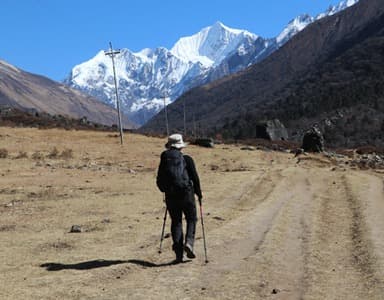
Reaching the iconic Everest Base Camp (5,364 m) and standing face-to-face with the treacherous Khumbu Icefall.
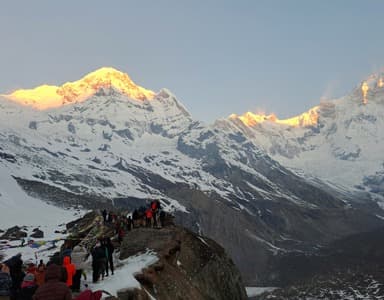
Summiting Kala Patthar (5,545 m) at dawn for the most comprehensive and awe-inspiring views of the Mount Everest massif.
Enhancing acclimatization and cultural understanding by trekking off the main path to the traditional Sherpa villages of Thame and Khumjung.
Experiencing a thrilling scenic flight to and from the famous cliffside runway of Tenzing-Hillary Airport in Lukla.
Visiting Tengboche Monastery to witness daily Buddhist rituals against the backdrop of Ama Dablam.
Trail Details
Journey Through 20 Days Everest Base Camp Trek
The trek to Everest Base Camp is a once-in-a-lifetime journey that takes you to the foot of the worlds highest mountain, Mount Everest, which now officially stands at 8,848.86 meters. This adventure is not only a physical challenge but also a deeply rewarding experience that offers breathtaking Himalayan scenery and a powerful sense of achievement. Reaching Everest Base Camp allows trekkers to connect with nature on a grand scale while testing their endurance and determination.
The journey begins in Kathmandu, a culturally rich city filled with history and tradition. Here, trekkers visit important UNESCO World Heritage Sites such as the holy Pashupatinath Temple, the impressive Boudhanath Stupa, and the ancient city of Bhaktapur. These sites provide insight into Nepals spiritual and cultural heritage and help travelers ease into the adventure before heading into the mountains.
After Kathmandu, a scenic and thrilling flight takes you to Lukla, the main gateway to the Everest region. From there, the trek passes through beautiful landscapes, forests, rivers, and traditional Sherpa villages. Along the trail, trekkers enjoy stunning views of famous peaks like Ama Dablam, Lhotse, Nuptse, and Pumori. Stops in lively places such as Namche Bazaar and quieter villages like Phakding and Thame allow trekkers to experience the warm hospitality and unique culture of the Sherpa people.
The 20-day itinerary is carefully planned to ensure safety and comfort, with proper acclimatization days to help the body adjust to high altitudes. Everest Base Camp itself sits at 5,464 meters, where the weather is often sunny but cold, with temperatures staying well below freezing. The best seasons for the trek are spring (MarchMay) and autumn (OctoberNovember), with November being especially popular for clear skies. Overall, this trek is suitable for both experienced trekkers and adventurous beginners, offering a safe, well-organized, and unforgettable Himalayan experience.
Beyond the physical journey, the Everest Base Camp trek is also a deeply emotional and spiritual experience. Walking in the footsteps of legendary climbers and explorers creates a strong connection to the history of mountaineering. Prayer flags, mani stones, and ancient monasteries along the trail reflect the strong Buddhist beliefs of the region, adding meaning and peace to the trek. Every step closer to base camp feels symbolic, representing perseverance, patience, and respect for nature.
The natural beauty of the Everest region changes with altitude, making each day unique. Lush forests of pine and rhododendron gradually give way to rocky trails, glaciers, and wide alpine valleys. Trekkers may spot wildlife such as yaks, Himalayan tahrs, and colorful mountain birds. The dramatic Khumbu Glacier near Everest Base Camp is one of the highlights of the trek, offering a powerful reminder of the raw and untamed nature of the Himalayas.
Majestic Peaks and significant sites of the Everest Base Camp Trek
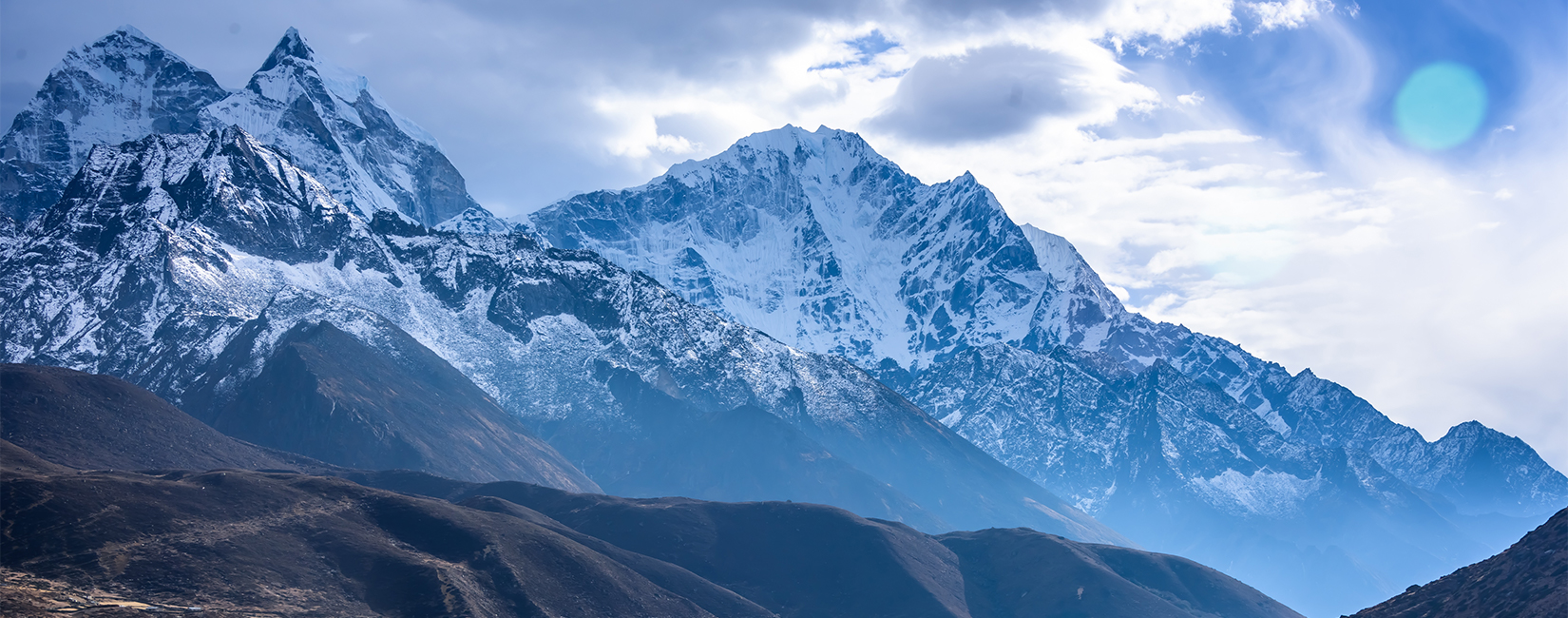
The trek to Everest Base Camp offers spectacular views of some of the world’s most iconic and majestic peaks. As trekkers make their way along the trail through the Khumbu region, they are treated to breathtaking vistas of these towering mountains:
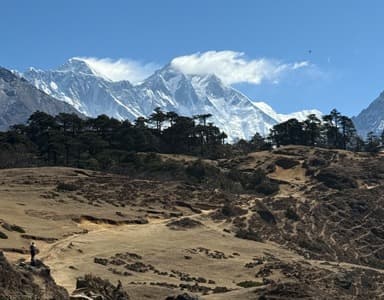
Mount Everest (Sagarmatha / Chomolungma, 8,848 m) – The highest mountain in the world, visible in all its glory from Kala Patthar and Everest Base Camp.
Lhotse (8,516 m) – Standing just beside Everest, its massive south face dominates the skyline.
Nuptse (7,861 m) – A dramatic ridge that adds to the grandeur of the Everest panorama.
Ama Dablam (6,812 m) – Often called the “Matterhorn of the Himalayas,” its sharp, elegant peak is visible from Dingboche and Pangboche.
Pumori (7,161 m) – A striking peak that frames the view of Everest, especially from Base Camp.
Thamserku (6,623 m) – A beautiful peak near Namche Bazaar, admired for its rugged charm.
Kangtega (6,782 m) – Also known as “The Snow Saddle,” visible from Dingboche and Pangboche, adding to the scenic diversity of the trail.
Culturally significant sites include the Tengboche Monastery, the Khumjung Monastery (housing a purported Yeti scalp), the Hillary Hospital in Khunde, and the climber memorials at Chukwu Lhari.
Along the journey, each turn of the trail reveals new perspectives of these mountains, making the trek not just a physical adventure, but a feast for the eyes and soul. From the verdant forests of the lower valleys to the stark, snow-covered peaks above, the Everest region showcases the majestic beauty of the Himalayas at every step.
Places
Altitude
Highlights
Lukla
2,860 m
Starting point of the trek; has the famous Tenzing-Hillary airport.
Phadking
2,610 m
First day’s trek; scenic villages and riverside trail.
Namche Bazaar
3,440 m
Sherpa capital; great for acclimatization, shops, and viewpoints.
Tengboche
3,867 m
Famous Tengboche Monastery with views of Ama Dablam.
Dingboche
4,360 m
High-altitude village; spectacular mountain views; good for acclimatization.
Lobuche
4,910 m
Rocky village; base for the final push to EBC; memorials for climbers.
Gorakshep
5,164 m
Last stop before Everest Base Camp; small settlement.
Everest Base Camp (EBC)
5,364 m
Main destination; view of Everest’s Khumbu Icefall.
Kala Patthar
5,545 m
Best viewpoint for Everest; sunrise/sunset photography spot.
Reaching Everest Base Camp is the ultimate reward of the journey. Standing at the base of the worlds highest peak brings a strong sense of pride and accomplishment that stays with trekkers long after they return home.
Table of Temperature
Month
Avg. Low Temp. (°C)
Avg. High Temp. (°C)
Jan
-17
4
Feb
-16
4
Mar
-13
7
Apr
-10
10
May
-7
15
Jun
-4
16
Jul
-3
16
Aug
-3
16
Sep
-6
15
Oct
-9
12
Nov
-11
6
Dec
-15
4
The carefully organized itinerary, experienced guides, and focus on safety ensure a smooth and enjoyable adventure. This trek is not just about reaching a destinationit is about personal growth, cultural discovery, and creating unforgettable memories in one of the most extraordinary landscapes on Earth.
Trip Alternatives
Everest Gokyo Lakes Trek (14 Days): An alternative route focusing on the pristine turquoise lakes of the Gokyo Valley and crossing the challenging Cho La Pass.
Everest View Luxury Trek in Nepal (8 Days): A shorter, lower-altitude trek reaching Tengboche Monastery, ideal for those with limited time who still want spectacular Everest views.
Detailed Itinerary
20 Days Everest Base Camp Trek - 20 days
Day 01
Arrival in Kathmandu
Upon your arrival at Tribhuvan International Airport in Kathmandu, a representative will greet you and transfer you directly to your hotel. After you check in and refresh, you will visit our main office located in the bustling tourist district of Thamel. Here, our expert guides will conduct a comprehensive pre-trek briefing. This session covers essential safety protocols, high-altitude adaptation strategies, and a detailed review of your equipment. It is an excellent opportunity to ask any final questions before we head into the mountains. The evening is yours to relax and adjust to the local time zone in preparation for the journey ahead.
MealsMeals Not Included
AccommodationHotel
Travel Duration30 min
Travel Distance5.4km
RouteTribhuvan International Airport to Thamel
Transportationcar
Elevation1400m
Day 02
Guided Tour of Kathmandu Valley
Today is dedicated to exploring the rich cultural history of the Kathmandu Valley, focusing on three prominent UNESCO World Heritage Sites. You will start at the sacred Hindu complex of Pashupatinath, situated on the banks of the Bagmati River, where ancient rituals take place daily. Next, you travel to the massive Boudhanath Stupa, a major center of Tibetan Buddhism in Nepal, surrounded by vibrant monasteries and incense-filled air. Finally, you will explore Bhaktapur Durbar Square, an ancient royal courtyard renowned for its intricate wood carvings and the towering Nyatapola Temple. You will return to your hotel to finalize your trekking bags.
MealsBreakfast Included
AccommodationHotel
Travel Duration7 hrs
Travel Distance30-40 km
RouteThamel to Kathmandu
Transportationcar
Elevation1400m
Day 03
Flight to Lukla and Trek to Phakding
Your Himalayan adventure begins with an early morning transfer to the airport for a thrilling, scenic flight to the Tenzing-Hillary Airport in Lukla. The flight offers sweeping views of the terraced hills and distant peaks. Upon landing on the dramatic mountain runway, you will meet your assigned porters. The trekking commences with a gradual descent through lush alpine forests and small agricultural settlements. You will cross your first swaying suspension bridges over the milky waters of the Dudh Koshi River. The trail is gentle, passing by carved mani stones and prayer wheels, culminating in the peaceful riverside village of Phakding.
MealsBreakfast, Lunch, and Dinner Included
AccommodationGuesthouse
Travel Duration35-40 min flight to Lukla and 3-4 hour trek
Travel Distance140 km flight + 6-7 km trek
RouteKathmandu to Phakding
Transportationair
Elevation1400m to 2610m (2860m-Lukla)
Day 04
Trek to Namche Bazaar
The trail today follows the Dudh Koshi River upstream, crossing it multiple times over high suspension bridges decorated with colorful prayer flags. You will pass through the entrance of Sagarmatha National Park in Monjo, where permits are verified. Beyond the village of Jorsale, the trail crosses the famous Hillary Suspension Bridge, suspended high above the river gorge. From here, prepare for a rigorous, steep, and sustained ascent through dense pine forests. Halfway up this formidable hill, if the weather is clear, you will catch your very first glimpse of Mount Everest. The climb eventually levels out as you enter Namche Bazaar, the bustling commercial hub of the Khumbu region.
MealsBreakfast, Lunch, and Dinner Included
AccommodationGuesthouse
Travel Duration5-6 hrs trek
Travel Distance10-12 km
RoutePhakding to Namche Bazaar
Transportationfoot
Elevation2610m to 3440m
Day 05
Acclimatization at Namche Bazaar
Acclimatization is vital for a safe progression into higher altitudes, making this rest day in Namche Bazaar crucial. "Rest" in the Himalayas involves staying active while sleeping at the same elevation. You will take a steep morning hike up to the Everest View Hotel to enjoy panoramic vistas of Everest, Lhotse, and the iconic pyramid of Ama Dablam. You may also visit the local Sherpa Culture Museum and the Sagarmatha National Park headquarters, which offer deep insights into mountaineering history and local ecology. The afternoon is free to browse the vibrant local market, grab a coffee, and stock up on any last-minute trekking supplies.
MealsBreakfast, Lunch, and Dinner Included
AccommodationGuesthouse
Travel Duration3-4 hrs (acclimatization tour)
Travel Distance4 km (acclimatization tour)
RouteNamche Bazaar to Namche Bazaar
Transportationfoot
Elevation3440m to 3450m
Day 06
Trek to Thame Village
Diverging from the busy main trail to Everest Base Camp, you will head west toward the traditional and serene village of Thame. This route follows an ancient trading path that historically linked the Khumbu region to Tibet. The trail contours along the Bhote Koshi River valley, passing through beautiful pine and rhododendron forests. You will notice a distinct drop in trekker traffic, allowing for a quiet and reflective hiking experience. Thame is the childhood home of Tenzing Norgay Sherpa and remains deeply rooted in traditional Sherpa culture. After arriving, you can take a short walk to the village monastery perched high on the hillside.
MealsBreakfast, Lunch, and Dinner Included
AccommodationGuesthouse
Travel Duration4-5 hrs trek
Travel Distance9.5 km
RouteNamche Bazaar to Thame
Transportationfoot
Elevation3440m to 3800m
Day 07
Trek to Khumjung Village
Leaving Thame, the route climbs gently eastward toward Khumjung, the largest permanent Sherpa settlement in the region. The trail offers a relatively relaxed day of walking compared to the steeper ascents on the main route. As you approach Khumjung, you are greeted by the striking sight of green-roofed houses nestled beneath the sacred peak of Khumbila, a mountain that has never been climbed due to its religious significance. Here, you will visit the Sir Edmund Hillary School and the ancient Khumjung Monastery. Inside the monastery, you can view the famous artifact purported to be the scalp of a Yeti, heavily guarded by the resident monks.
MealsBreakfast, Lunch, and Dinner Included
AccommodationGuesthouse
Travel Duration4 hrs of easy walking
Travel Distance6 km
RouteThame to Khumjung
Transportationfoot
Elevation3800m to 3790m
Day 08
Trek to Tengboche
The trail out of Khumjung descends sharply to the Dudh Koshi River at Phunki Tenga, a small settlement driven by water-powered prayer wheels. After a substantial lunch, prepare for a grueling, steep ascent through heavy forests of rhododendron and dwarf conifer. This steady climb demands endurance but rewards you immensely as you crest the ridge into Tengboche. The village is famously home to the Tengboche Monastery, the spiritual heart of the Khumbu. The monastery sits in a broad meadow surrounded by dramatic peaks, including the stunning vertical walls of Ama Dablam. You will have the opportunity to attend the monks' afternoon chanting ceremony, an incredibly moving experience.
MealsBreakfast, Lunch, and Dinner Included
AccommodationGuesthouse
Travel Duration4-5 hrs trek
Travel Distance10 km
RouteKhumjung to Tengboche
Transportationfoot
Elevation3790m to 3867m
Day 09
Trek to Dingboche
The morning begins with a descent through a serene birch and rhododendron forest toward Deboche, where you will spot several intricately carved mani stones. Crossing the Imja Khola river on a solid steel bridge, you will gradually climb toward the village of Pangboche, offering spectacular up-close views of Ama Dablam. The treeline suddenly vanishes as you push deeper into the arid, high-altitude alpine terrain. The valley widens significantly, and the cold winds become more pronounced as you follow the trail up to Dingboche. This sprawling village is protected from the icy valley winds by kilometer-long stone walls built to safeguard local barley and potato crops.
MealsBreakfast, Lunch, and Dinner Included
AccommodationGuesthouse
Travel Duration5-6 hrs trek
Travel Distance9 km
RouteTengboche to Dingboche
Transportationfoot
Elevation3867m to 4360m
Day 10
Acclimatization at Dingboche
At this extreme altitude, a second acclimatization day is required to adjust to the drastically reduced oxygen levels. You will spend the morning executing an acclimatization hike up the steep ridge of Nangkartshang Peak, which sits just above the village. Climbing to nearly 5,000 meters, this hike is physically demanding but critically trains your lungs for the days ahead. The summit of this ridge provides unobstructed, sweeping views of the Imja Valley, Makalu (the fifth highest mountain in the world), and the massive south face of Lhotse. After spending some time at the higher elevation, you will descend back to Dingboche to rest and rehydrate for the afternoon.
Leaving Dingboche, the trail ascends gradually onto a high plateau that leads toward the terminal moraine of the formidable Khumbu Glacier. The terrain shifts from alpine scrub to a desolate, rocky landscape, signaling your entry into the high Himalayas. You will reach Dughla, crossing a fast-flowing glacial stream before climbing a steep, challenging ridge. At the top of this ridge lies Chukwu Lhari, a solemn memorial ground dedicated to climbers and Sherpas who lost their lives on Everest. Surrounded by jagged peaks, the atmosphere here is incredibly powerful. The path then levels out, following the lateral moraine of the glacier toward the small, freezing settlement of Lobuche.
MealsBreakfast, Lunch, and Dinner Included
AccommodationGuesthouse
Travel Duration4-6 hrs trek
Travel Distance8.4 km
RouteDingboche to Lobuche
Transportationcar
Elevation4360m to 4910m
Day 12
Trek to Gorak Shep and Hike to Kala Patthar
Today's 4-5 hour walk takes you to Gorak Shep, a frozen lakebed that is the last settlement before Base Camp. After lunch, you will hike to the summit of Kala Patthar (5,545m). Kala Patthar is the highest point of your trek. It offers the most iconic panoramic view of Mount Everest and the surrounding peaks. You'll descend back to Gorak Shep for the night.
MealsBreakfast, Lunch, and Dinner Included
AccommodationGuesthouse
Travel Duration6-8 hrs
Travel Distance10 km
RouteLobuche to Gorak Shep
Transportationfoot
Elevation4910m to 5164m (5545m-Kalapatthar)
Day 13
Trek to Everest Base Camp
Today, you reach your ultimate goal. After breakfast, you will trek to Everest Base Camp. The trail can be challenging, so it is essential to follow your guide. Standing at the base of the world's highest mountain is an incredible feeling. During the spring climbing season (April-May), the area is a vibrant city of tents. After soaking in the moment, you will return to Gorak Shep.
MealsBreakfast, Lunch, and Dinner Included
AccommodationGuesthouse
Travel Duration3-4 hrs of trek
Travel Distance7 km round trip
RouteGorak Shep to Gorak Shep
Transportationfoot
Elevation5164m to 5364m
Day 14
Trek down to Pheriche
The descent begins today with a 4-5 hour walk down to Pheriche. It’s best to start early to avoid the afternoon winds. In Pheriche, you can visit the rudimentary hospital managed by the Himalayan Rescue Association (open after 3:00 pm).
MealsBreakfast, Lunch, and Dinner Included
AccommodationGuesthouse
Travel Duration4-5 hrs trek
Travel Distance9.6 km
RouteGorak Shep to Pheriche
Transportationfoot
Elevation5164m to 4371m
Day 15
Trek to Phortse Village
The descent continues as you walk with noticeably more energy thanks to the increasing oxygen levels. You will follow the Imja Khola river downstream, passing through beautiful alpine meadows that were harsh and intimidating just days before. The route offers a different perspective of the towering peaks, giving you time to appreciate the changing landscapes as you re-enter the treeline. You will pass through Pangboche, home to the oldest monastery in the Khumbu region, before navigating the undulating hillside trails toward the quiet village of Phortse, resting comfortably in the thicker, warmer air.
MealsBreakfast, Lunch, and Dinner Included
AccommodationGuesthouse
Travel Duration6 hrs of walking
Travel Distance14 km
RoutePheriche to Phortse
Transportationfoot
Elevation4371m to 3810m
Day 16
Trek back to Namche Bazaar
Leaving the spiritual atmosphere of the Phortse area, the trail drops sharply down to the Dudh Koshi River at Phunki Tenga. You will cross the suspension bridge and tackle the final major uphill section of the trek, a steep climb through the forest that eventually levels out onto a spectacular balcony trail. This winding path offers final, sweeping views of Everest, Lhotse, and Nuptse behind you. As you round the corner, the bustling amphitheater of Namche Bazaar reveals itself. Enjoying your first hot shower in days, you can celebrate the successful completion of the high-altitude portion of the trek with your team in local cafes.
MealsBreakfast, Lunch, and Dinner Included
AccommodationGuesthouse
Travel Duration5-6 hrs of walking
Travel Distance10-11 km
RoutePhortse to Namche Bazaar
Transportationfoot
Elevation3810m to 3440m
Day 17
Trek back to Lukla
Your final day of trekking is a long but deeply rewarding walk down the Dudh Koshi valley. You will descend the steep hill out of Namche Bazaar, crossing the high Hillary Suspension Bridge one last time. The trail winds through familiar villages like Monjo and Phakding, where the air is thick, warm, and rich with the smell of pine trees. The final leg involves a steady, gradual ascent back up to the airstrip at Lukla. Upon arrival, you will check into your teahouse and spend the final evening in the mountains celebrating with your guides and porters, acknowledging their immense effort in ensuring your safe passage.
MealsBreakfast, Lunch, and Dinner Included
AccommodationGuesthouse
Travel Duration7-8 hrs of trek
Travel Distance18-19 km
RouteNamche Bazaar to Lukla
Transportationfoot
Elevation3440m to 2860m
Day 18
Flight back to Kathmandu
Weather permitting, you will board a small twin-otter aircraft early in the morning for the dramatic flight out of Lukla. Watching the massive Himalayan peaks shrink as you fly south toward the Kathmandu valley is a surreal experience. Upon landing at the domestic terminal, our team will transfer you back to your hotel. The sudden rush of traffic, noise, and civilization is a stark contrast to the quiet isolation of the mountains. The remainder of the afternoon is free for you to rest, take a long shower, and process the incredible journey you have just completed in the high Himalayas.
MealsBreakfast Included
AccommodationHotel
Travel Duration35-40 min flight, followed by a hotel transfer
Travel Distance140km flight
RouteLukla to Kathmandu
Transportationair
Elevation2860m to 1400m
Day 19
Leisure Day in Kathmandu
This buffer day is intentionally built into the itinerary to account for potential flight delays or cancellations out of Lukla, which are common due to unpredictable mountain weather. If your flight proceeded on schedule, today serves as a well-deserved rest and recovery day. You can sleep in, enjoy the hotel amenities, and explore the labyrinthine streets of Thamel at your own pace. You may visit the Garden of Dreams for a quiet afternoon or explore the bustling Ason market for spices and tea.
MealsBreakfast Included
AccommodationHotel
RouteKathmandu to Kathmandu
Transportationcar
Elevation1400m
Day 20
Departure from Kathmandu
Your epic 20-day journey comes to an end today. After breakfast at the hotel, check your luggage to ensure you have all your belongings. Depending on your flight schedule, a representative will meet you at the hotel and transfer you to Tribhuvan International Airport approximately three hours before your international departure. As you board your flight, you leave Nepal carrying profound memories of the Sherpa people, the formidable landscapes of the Khumbu, and the sheer accomplishment of standing at the base of the highest mountain in the world. We look forward to welcoming you back for your next Himalayan adventure.
MealsBreakfast Included
Travel Duration30 min to the airport
Travel Distance5.4 km
RouteKathmandu to Kathmandu
Transportationcar
Elevation1400m
If the provided schedule isn't suitable for you, we can create personalized travel arrangements.
4 nights of twin-sharing accommodation at a 3-star hotel in Kathmandu with breakfast.
A guided city tour in Kathmandu with entry fees.
Round-trip domestic flight tickets from Kathmandu/Ramechhap (Manthali) to Lukla.
Sagarmatha National Park permit and local taxes (Gaupalika permit fee).
Full board meals (breakfast, lunch, dinner: one item per meal) during the trek.
15 nights of twin-sharing shared bathroom teahouse/lodge accommodation during the trek.
An experienced, English-speaking trek leader (First Aid and eco-trained).
One Sherpa helper for every two trekkers (25 kg per porter).
Purified safe drinking water (iodine-treated).
First Aid Kit
All government and local taxes.
Cost Excludes
Nepal visa fees and international airfare.
Lunches & Dinners in Kathmandu and Tea & Coffee during the trek
Down jacket and Sleeping bag (can be rented in Thamel).
Excess baggage charges on domestic flights (allowance is 15kg total).
Travel and rescue insurance (mandatory).
Personal expenses (e.g., phone calls, laundry, hot showers, Wi-Fi, battery charging).
Tips for guides, porters, and drivers.
Any costs associated with flight cancellation, force majeure, and extending your trip.
Any other expenses not in inclusion section.
Trekking Guide
Everything you need to know
Climbing Grades
This is a high-altitude trek graded as "Moderate to Demanding." It requires no technical climbing skills, ropes, or crampons, but involves sustained daily hiking over rugged, rocky, and steep terrain at high elevations.
Physical Requirement and Health
Participants must possess a strong level of cardiovascular fitness. You will hike for 5 to 7 hours a day on varying gradients. Trekkers with pre-existing heart, lung, or joint conditions must consult a physician before joining.
Training program
Begin a rigorous training regimen at least 8 to 12 weeks prior to arrival. Focus on cardiovascular endurance (running, swimming, cycling) and leg strength. Hike locally on uneven terrain with a weighted backpack (5-10 kg) to simulate trek conditions.
Age Limit
There is no strict upper age limit provided you are exceptionally fit and pass a medical clearance. The minimum recommended age is 12 years old, due to the harsh physical demands and altitude risks.
Group size
To ensure personalized attention and optimal safety, our group sizes range from a minimum of 2 to a maximum of 20 trekkers. Private solo trips can also be accommodated upon request.
Best time to visit and weather conditions
The optimum windows for this trek are Spring (March to May) and Autumn (September to November). Spring offers blooming rhododendrons and warmer temperatures, while Autumn provides the clearest skies and sharpest mountain views.
Visa Information
Foreign nationals require a visa to enter Nepal. Visas can be obtained on arrival at Tribhuvan International Airport or at land border crossings. Ensure your passport has at least six months of validity remaining from your date of entry.
Necessary Permits
All trekkers require a Sagarmatha National Park Entry Permit and a Khumbu Pasang Lhamu Rural Municipality Entrance Permit. These are arranged by our staff and included in your package. Indian and SAARC nationals have varied fee structures, which are factored into regional pricing.
Insurance details
Comprehensive travel insurance is strictly mandatory. Your policy must cover high-altitude helicopter rescue and evacuation up to 6,000 meters, alongside standard medical emergencies, repatriation, and trip cancellation.
Transportation and/or Domestic Flight
The package includes private airport transfers in Kathmandu. The primary access to the trekking region is a 35-minute twin-otter domestic flight from Kathmandu (or Ramechhap, depending on aviation regulations) to Lukla.
Packaging and Luggage Information
Pack in layers to accommodate fluctuating temperatures. Domestic flights strictly limit baggage to 15 kg total per person (10 kg checked duffel, 5 kg daypack). Excess baggage will incur out-of-pocket fees and may be delayed.
Porter service and guidelines
We provide one porter for every two trekkers. The maximum weight a porter will carry is 25 kg (12/13 kg per trekker). Pack your main gear in a sturdy, waterproof duffel bag while you carry your daily essentials in your daypack.
Accommodation, meals, and water during the trip
In Kathmandu, you will stay in comfortable hotels. On the trail, accommodation consists of standard teahouses with twin-sharing beds and mostly shared bathroom facilities. Three meals a day (breakfast, lunch, dinner) are provided from a diverse menu. Stick to boiled or iodine-purified water; avoid single-use plastics.
Altitude Information, Acclimatization, and AMS safety
This itinerary is meticulously designed for gradual ascent, featuring mandatory acclimatization days in Namche Bazaar and Dingboche. Acute Mountain Sickness (AMS) is a real risk above 3,000 meters. Drink 3-4 liters of water daily, ascend slowly, and communicate any symptoms (headache, nausea) to your guide immediately.
Internet and Phone connectivity
Wi-Fi is available in most teahouses for an additional fee, though speeds decrease as altitude increases. You can purchase a local Ncell or NTC SIM card in Kathmandu for cellular data, which works reliably up to Tengboche and sporadically thereafter.
Currencies acceptable and to use
The Nepalese Rupee (NPR) is the only accepted currency on the trail. Exchange your foreign currency or use ATMs in Kathmandu or Namche Bazaar. Teahouses do not accept credit cards; carry enough physical cash for extra snacks, hot showers, and Wi-Fi.
Tipping Guidelines
Tipping is a customary way to show appreciation for the hard work of your local crew. While at your discretion, a general guideline is to pool 10-15% of your total trek cost to distribute among your guide, assistant guides, and porters at the end of the trek.
Area Guidelines
Respect the fragile alpine environment by adhering to "Leave No Trace" principles. Do not litter, stick to marked trails to prevent erosion, and respect the local flora and fauna inside the Sagarmatha National Park.
Photography guidelines and cultural sensitivity
Always ask for permission before photographing local residents. When passing Mani walls or Buddhist stupas, always walk to the left, keeping the monument on your right. Dress modestly, avoiding overly revealing clothing in villages and monasteries.
How to Book Your Trek
Check Our Website: Visit our website to see available departure dates and the current status of each trek.
Contact Us: Reach out via email or phone to confirm date availability for your group size and to ask any questions.
Book your Spot: After reading our booking terms, please send us a 20% advance deposit per person via bank transfer.
Confirmation & Final Payment: Your booking is confirmed once we receive your signed form and deposit. We will send you an invoice for the final balance. The remaining 80% is due upon your arrival in Kathmandu and can be paid in cash or by credit card.
Trip FAQs
General FAQ’s for Nepal
Who are the luxury trekking operators in Nepal, and what makes you different?
While many companies offer standard backpacker packages, specialized luxury trekking operators in Nepal like Himalayan Planet Adventures focus entirely on high-end logistics. We distinguish ourselves by providing a truly "seamless" experience. From the moment you land, you will enjoy five-star hospitality in Kathmandu and exclusive access to the absolute best available mountain lodges on the trail.
Why is Himalayan Planet Adventures the best tour and trekking company in Nepal?
As our Founder & Managing Director, Nabaraj Thapa, always emphasizes, true luxury lies in personalized service. We are widely considered the best trekking company in Nepal and a premier luxury tour operator in Kathmandu because we refuse to compromise on your comfort. Whether you are trekking in Nepal or taking a cultural tour through Bhutan and Tibet, our VIP trekking packages feature hand-picked private guides, luxury transfers, and exclusive stays at world-class properties.
What should I know about booking my flights to Kathmandu, Nepal?
When booking flights to Kathmandu, Nepal, aim to land at Tribhuvan International Airport (KTM) at least one full day before your trip begins. This gives you time to shake off the jet lag, and attend a private pre-trip briefing and gear check at our office to ensure you are 100% prepared.
Do I need to plan an extra day in Kathmandu?
Generally, if you book Tours in Nepal, no extra day is necessary. But if you are going for Treks and Expedition, we strongly advise adding at least 1 extra day in Kathmandu as a contingency buffer at the very end of your itinerary so you never have to stress about missing your flight’s home!
Will my private guide in Nepal speak good English?
Yes! Every single English speaking tour/trekking/nature/hiking guide in Nepal employed by Himalayan Planet Adventures is government-certified and highly fluent. They aren't just there to show you the trail; they are rigorously trained to communicate technical safety details and share rich, local cultural stories so you truly connect with the Himalayas.
Can I request a foreign language guide in Nepal instead?
Of course. We know our luxury travelers come from all over the globe. If you prefer, we can easily provide an experienced German speaking guide in Nepal, or a Spanish speaking guide in Nepal (as well as French and Chinese experts). Just let us know your preferred language when booking, and we will arrange it for a small additional premium to ensure you feel completely at home!
Nepal’s Visa Processing & Arrival
Does Nepal has an international airport?
Yes, Tribhuvan International Airport (TIA) in Kathmandu is the main international hub, but Pokhara and Bhairahawa international airports are occasionally operated.
Do I need a visa for Nepal, and can I get a Nepal visa on arrival?
Yes, almost all foreign nationals need a visa, but getting a Nepal visa on arrival at Tribhuvan International Airport is incredibly easy. We highly recommend completing the Nepal visa application online before you fly. Just print the barcode, bring it to the airport kiosk, and skip the longest lines!
Is any nationality banned on-arrival visa for Nepal entry?
While Nepal has an incredibly welcoming open-door policy for most of the world, there are a few exceptions. Citizens of approximately 12 countries are not eligible for the On-Arrival Visa facility and must secure their visa before traveling to Nepal - Nigeria, Ghana, Zimbabwe, Eswatini (Swaziland), Cameroon, Somalia, Liberia, Ethiopia, Iraq, Palestine, Afghanistan, and Syria—as well as refugees holding travel documents, are not eligible for a visa on arrival.
If you hold a passport from one of these countries, you must secure your tourist visa from a Nepalese diplomatic mission (Embassy or Consulate) before you fly. But don't let that stop your Himalayan dreams! When you book your trek or tour with Himalayan Planet Adventures, we provide all the official booking confirmations, itinerary details, and support documents you need to make your embassy application as smooth and stress-free as possible.
What are the Nepal entry requirements?
The Nepal entry requirements are straightforward: you need a passport with at least 6 months of validity, one blank page, and exact cash for your visa fee. There are no complicated background checks—just land, pay, and get your stamp.
How much is the Nepal tourist visa cost?
The current Nepal tourist visa cost is $30 for 15 days, $50 for 30 days, and $125 for 90 days. Always bring clean, unripped US Dollars to pay this fee at the airport—credit card machines at immigration are notoriously unreliable.
How long should I expect the visa process at the Kathmandu airport?
Typically, the Kathmandu airport visa process takes between 30 and 60 minutes, depending on the number of arriving international flights.
Do foreign citizens need a visa for Nepal?
Yes, foreign citizens need a visa, but you are fully eligible for the quick visa on arrival at the airport (there are some exceptions).
What about Indian citizens? Do they need a visa?
No. Under the current rules, Nepal visa for Indian citizens is not required. You can enter freely with a valid Indian Passport or Voter ID card.
Can I easily extend my Nepal tourist visa?
Absolutely. If you fall in love with the Himalayas and want to stay, we can help you extend your Nepal tourist visa at the immigration offices in Kathmandu or Pokhara for just $3 per extra day.
What are your best Kathmandu airport arrival tips?
The domestic and international terminals can be chaotic. Our top tip? Don't stress about the taxi haggle. When you book a trek or tour with us, our staff will be waiting outside the terminal with a sign featuring your name, ready to whisk you safely to your hotel.
Who will come to pick me up at the airport on my arrival?
It depends on the itinerary but usually a Himalayan Planet Adventures representative will meet you directly outside the arrival hall with a personalized sign. You will be transferred to your in a private vehicle.
Can I buy a SIM card at the airport in Kathmandu?
Yes, local providers like Ncell and Nepal Telecom have kiosks in the arrival area. You only need a passport copy and one photo to get a 4G SIM card instantly.
Where can I exchange money on arrival in Nepal?
There are several authorized currency exchange counters at the airport and throughout Thamel. We recommend exchanging some cash for small personal expenses during the trek in Thamel area as they offer good rates than at the airport.
Best Time to Visit & Weather in Nepal
When is the absolute best time for me to visit Nepal?
The peak seasons are Spring (March to May) and Autumn (September to November). Spring brings lush valleys and blooming rhododendrons, while Autumn offers crystal-clear skies and the sharpest, most breathtaking mountain views. If you want the classic Himalayan experience, these are your golden windows and best time to visit Nepal!
Can I travel to Nepal during the winter or monsoon seasons?
Absolutely. While the summer monsoon (June–August) brings heavy rain to the lower valleys, it’s the perfect time for us to take you to "rain-shadow" regions like Upper Mustang, which stay completely dry. Winter (December–February) is freezing at high altitudes, but if you don't mind the cold, lower-elevation treks are delightfully empty and offer incredibly clear skies.
Will unpredictable weather ruin my trip?
Himalayan weather has a mind of its own! But as your local experts, we know exactly how to handle it. We always build strategic buffer days into our itineraries so that a sudden rainstorm or mountain fog won't derail your entire vacation.
What is the Nepal weather by month like?
It varies wildly! Spring brings blooming rhododendrons and mild temperatures. Autumn is crisp and clear. Winter (Dec-Feb) is freezing up high but beautiful and quiet down low. Summer (June-Aug) brings heavy rain.
Can I go tour or trekking during the monsoon season in Nepal?
We generally don't recommend standard routes for trekking during the monsoon season in Nepal due to leeches, mud, and zero mountain visibility. However, if summer is your only time off, we run incredible treks in "rain-shadow" regions like Upper Mustang and Dolpo, which stay surprisingly dry! Whereas for the city tours, we can welcome you any month of the year.
Is winter trekking in Nepal a bad idea?
Not at all! Winter trekking in Nepal (December to February) is a closely guarded secret. While high passes like Thorong La might be blocked by snow, lower-altitude treks like Poon Hill or Mardi Himal are totally empty, offering incredibly crisp views if you don't mind the cold nights.
FAQs
Do I need to carry my own heavy backpack?
No, you only need to carry a small daypack with your daily essentials like water, sunscreen, a camera, and a fleece jacket. Our dedicated porters will handle your main duffel bag, carrying it from teahouse to teahouse.
Can I charge my camera and phone batteries on the mountain?
Yes, almost all teahouses offer charging stations. However, because most rely on solar power, they charge a small hourly fee (usually $2 to $5) for device charging. A high-capacity power bank is highly recommended.
Are there hot showers available during the trek?
In lower elevations like Phakding and Namche Bazaar, hot showers are generally available. As you go higher, teahouses offer "bucket showers" heated by gas or solar, which cost an additional small fee. Above Dingboche, it is often too cold for showering.
I'm worried about getting altitude sickness. How do you prevent it, and what happens if I feel sick?
Great question! Prevention of AMS is our top priority. Our itinerary is designed explicitly with two acclimatization days to help your body adjust naturally. Your experienced guide is trained to spot early signs of AMS and will monitor your health daily. We'll also remind you to walk at a relaxed pace and drink plenty of water. If you do feel unwell, your guide will have the necessary knowledge and supplies to manage it right away.
Am I fit enough for this? I'm not a mountaineer!
You don't need to be a pro athlete! This trek is rated "Moderate to Adventurous", meaning it's challenging but achievable for most people with a good level of fitness. If you can handle a few hours of walking or jogging each week, you're on the right track. We recommend starting some light cardio and hiking exercises a few months before your trip to feel more prepared.
As a woman travelling by myself, is this trip safe?
Absolutely. Your safety and comfort are paramount. Our professional guides are thoroughly vetted and experienced in looking after all trekkers, including solo women. The trekking route is well-established, and you'll stay in family-run teahouses where the owners are friendly and welcoming. For extra peace of mind, we assign one porter helper for every two trekkers, so our trusted team always supports you.
What are the teahouses actually like? I'm nervous about comfort and cleanliness.
Think of them as simple, cosy mountain lodges run by local Sherpa families. Rooms are typically twin-sharing. While they are basic, they are clean and offer a warm bed. At lower altitudes, you might even get a private bathroom, but as you go higher, facilities are usually shared. It’s all part of the authentic Himalayan experience!
What's the plan if there's a serious emergency on the mountain?
We are always prepared. Your guide knows first aid and emergency procedures. We carry an exclusive medical kit bag on every trip. In the case of a serious medical issue, we will coordinate a swift and efficient helicopter evacuation. So, having comprehensive travel and rescue insurance is mandatory for this trip.
A delay of the Lukla flight may occur. What happens if that affects our plans?
It's true, the weather in the mountains is unpredictable and can sometimes delay flights. We schedule flights for the early morning to increase the chance of flying. If a delay occurs, our team in both Kathmandu and Lukla will handle all the arrangements to get you on the next available flight and adjust the itinerary as smoothly as possible.
I have a sensitive stomach. Is the food and water safe?
We take food and water safety very seriously. On the trek, you'll get three full meals a day (breakfast, lunch, and dinner) prepared in the teahouse kitchens. The menus offer a variety of tasty and hygienic dishes. For drinking water, we provide safe, purified water using iodine tablets to ensure you stay healthy and hydrated.
Nepal’s Permits & Mandatory Guide Regulations
Is female solo travel safe if I have to hire a guide?
100% yes. Nepal is widely considered one of the safest countries in the world for women. Whether you are trekking solo or joining one of our group departures, our guides are rigorously vetted, highly trained professionals. You will feel less like you have a strict chaperone, and more like you're hiking with a protective, knowledgeable local friend.
How do I get my necessary entry fees, trekking permits and TIMS card?
You don't need to worry about the paperwork at all. The entire permit and e-TIMS system is now digitized and must go through a registered agency. Just send us your passport copy and a passport-sized photo before you arrive, and we will hand you all your legal permits on day one. Regarding entry fees, you can get them on the spot during your visit, there is no online convenience for many of the entry fees.
Do I need a guide to trek/tour in Nepal, or can I go solo?
Due to the Nepal mandatory guide rule, independent solo trekking in Nepal is no longer permitted in National Parks and Conservation Areas. For your safety and to support local mountain communities, you must hire a licensed guide through a registered agency like ours. But don't worry—our guides feel more like knowledgeable local friends than strict chaperones, whether you are a solo traveler or in a group! Regarding the tours, you can go solo, but having a guide with information about local and hidden places is not a bad decision.
What is a TIMS card in Nepal, and do I need one?
The TIMS card Nepal (Trekkers' Information Management System) is a mandatory digital safety permit for trekkers only. You cannot buy this yourself anymore; as a registered agency, we handle all the paperwork and secure this for you before you even arrive.
Flight & Land Transportation in Nepal
What form of transportation do you provide in Kathmandu?
We provide private luxury vehicles (cars or SUVs) for all airport transfers and guided sightseeing tours of Kathmandu’s UNESCO World Heritage sites. It also depends on group sizes. We can also arrange Tourist bus and domestic flights.
Are domestic flights safe?
Let’s be brutally honest: flying into the high Himalayas involves navigating deep valleys and unpredictable winds, which carries inherent risks. Domestic flights in Nepal are a thrilling way to bypass rough roads, but they are entirely dependent on visual weather conditions. However, we mitigate this by only booking our clients on Nepal's most reputable domestic carriers that maintain strict safety protocols. If the weather looks dangerous, the pilots simply will not fly. Your safety always comes before our schedule.
What happens if my domestic flight gets delayed or canceled?
Because mountain airstrips rely on visual flight rules, flight delays due to weather are a normal part of traveling in Nepal. If your flight is grounded, we handle all the stressful rebooking logic behind the scenes. We highly advise leaving a 1-2 day buffer at the end of your trip just in case!
What are the roads like? Are they scary to drive on?
Nepalese highways are notoriously winding, bumpy, and prone to traffic or monsoon landslides. To keep you as comfortable and safe as possible, we never use crowded public transport. We transport you in modern, air-conditioned VIP tourist buses or well-maintained private jeeps driven by seasoned locals who know every pothole on the route.
Should I take a bus or fly intercity?
A bus takes about 7-12 hours or more depending on traffic for inter-city transfer, while a flight takes 25-45 minutes. If you are on a budget and want to see the countryside, we will book you on a luxury VIP Nepal tourist bus with AC and comfortable suspension. If you are short on time, fly!
What is self-driving in Nepal actually like?
Brutally honest? Driving in Nepal can be bumpy, dusty, and chaotic due to ongoing highway expansions. That is why we never recommend self-driving. We use experienced, professional drivers in well-maintained private jeeps to keep you safe and comfortable.
Nepal’s Accommodation, Food & Connectivity
What kind of accommodation will I stay in during my trip?
It depends on your journey! In cities like Kathmandu and Pokhara, you'll relax in comfortable, modern hotels ranging from boutique heritage stays to luxurious 5-star properties. If your adventure takes you into the mountains or rural areas, you'll experience our famous, cozy "teahouses" or locally-run guest houses. At Himalayan Planet Adventures, we personally vet every single bed to ensure it meets our strict standards for cleanliness and comfort, whether you are staying in the city or up in the clouds.
Is the food safe to eat, and what will I actually be eating?
The food is incredibly safe, fresh, and absolutely delicious! The national staple is Dal Bhat (a hearty, all-you-can-eat platter of rice, lentil soup, and vegetable curry), but you aren't limited to local cuisine. Most tourist hubs and rural guest houses offer massive menus featuring pasta, pizza, momos (dumplings), and even freshly baked goods. We strictly avoid risky street food stops and only take you to trusted, hygienic kitchens so you stay healthy throughout your entire trip.
I am vegetarian, vegan, or gluten-free. Will I starve in Nepal?
Not a chance! Nepal is a culinary paradise for vegetarians and vegans. Because Hindu and Buddhist traditions heavily influence our daily diet, plant-based meals are available everywhere. Gluten-free options are also easily accommodated with rice-based dishes and lentil breads. Just let our team at Himalayan Planet Adventures know your dietary restrictions when you book, and we will seamlessly handle the rest.
Will I have Wi-Fi and mobile data to stay in touch with my family?
Yes, you'll be surprisingly well-connected! Wi-Fi is standard and usually free in city hotels and restaurants. Once we leave the major valleys, connectivity becomes a mix of paid guest house Wi-Fi and mobile data. We highly recommend grabbing a local NTC (Namaste) or Ncell SIM card—we'll help you set this up on day one! While there are a few remote "dead zones" in the high mountains, you will generally have enough signal to send an "I made it!" photo back home.
What are the toilets and hygiene standards like across Nepal?
In city hotels, popular tour destinations, and nicer restaurants, you'll find standard western flush toilets. As you venture into more rural areas or trailheads, you will likely encounter traditional Asian squat toilets. They might take a little getting used to, but they are hygienic and kept very clean! We always advise our clients to keep a roll of toilet paper and a small bottle of hand sanitizer in their daypack, just to be fully prepared wherever the day takes us.
Equipment & Packing Lists for Nepal
Do I need to buy an expensive sleeping bag back home?
Not at all! You can use the premium sleeping bags that we provide or easily rent premium, expedition-grade sleeping bags and thick down jackets right here in Kathmandu's Thamel district for just a couple of dollars a day. We will personally take you to trusted rental shops before your trip begins. It saves you a ton of money and massive amounts of luggage space.
What kind of footwear do I really need?
You need sturdy, waterproof trekking boots with excellent ankle support. But here is the most important advice we can give you: break them in before you arrive! The best trekking boots for Nepal are the ones you have already broken in. Showing up to the Himalayas with brand-new, stiff boots is a guaranteed recipe for blisters and misery. For the city areas, comfortable sneakers is recommended
How do I pack for such unpredictable mountain weather?
The secret to packing for Nepal is the "layering system." You need moisture-wicking base layers, a warm fleece mid-layer, and a reliable wind/waterproof outer shell. You might be sweating in a t-shirt in the lush valleys at 9:00 AM, and bundled up in a down jacket shivering at a mountain pass by 2:00 PM. We will send you a comprehensive, checklist-style packing guide once you book! For the city area, bring clothes according to the weather.
Is buying trekking gear in Thamel a good idea?
Yes and no. Buying trekking gear in Thamel is great for cheap, functional fleece and trekking pants. However, if you are buying critical safety gear—like your main waterproof jacket or boots—we recommend buying authentic brands at home. Many items in Thamel are knock-offs.
Currency, Budgeting & Tipping in Nepal
What currency is used in Nepal, and should I bring USD?
The currency in Nepal is the Nepalese Rupee (NPR). While hotels and our agency accept USD, you must use NPR on the trekking trails. Bring clean USD or Euros from home, and we will guide you to the best money exchange counters in Thamel to get local cash.
Are there ATMs in Kathmandu and on the trail?
There are plenty of reliable ATMs in Kathmandu and Pokhara. However, never rely on mountain ATMs (like the one in Namche Bazaar)—they frequently run out of cash or lose power. Withdraw all the cash you need for snacks and tips before we leave the city!
What is the tipping guide in Nepal for guides and porters?
Tipping is not mandatory, but it is deeply embedded in the local trekking culture. The standard tipping guide in Nepal is about 10% to 15% of your total trip cost, pooled together and divided among your guide and porters on the final night to say thank you for keeping you safe!
Does it cost an extra amount if I am a solo traveler?
Yes, there is usually a single supplement fee for solo travelers to cover the costs of private accommodation and personalized guiding services that are otherwise shared in a group. You can choose a price option based on the number of travelers.
How much additional money do I need per day?
We recommend budgeting $20-$100 USD per day for personal expenses. It will also depend on the type of trip you are interested in. This covers extra items not included in packages, such as bottled water, souvenirs, tips, and many more.
Can I get an extra porter in/during trips?
Yes, it is possible to hire an extra porter if you find your bag is too heavy, though it is better to arrange this in advance to ensure availability during peak seasons.
How do you allocate porters’ luggage during trips?
We follow strict ethical standards for porter welfare. Usually, one porter carries the duffel bags of two trekkers, with a maximum weight limit of 20kg to 25kg total.
Booking and Cancellation Policy for Nepal
How advanced do I need to be to book the trips?
We recommend booking at least 1 to 6 months in advance, especially if you plan to travel during the peak spring or autumn seasons for treks and long trips. It also varies on the country or place you want to visit. The day trips can be booked 24 hours in advance. This ensures we can secure your flights and the best luxury lodge available accommodation.
How much advance deposit do I need to pay to secure my trip?
To officially confirm your adventure with Himalayan Planet Adventures, we require a small20% non-refundable advance deposit. This isn't just a holding fee—it allows our local team to immediately act on your behalf to secure your mandatory government permits, reserve domestic transport, and lock in the best available accommodation before things sell out!
Is it safe to pay my advance deposit online?
Absolutely. We use a 100% secure, SSL-encrypted payment gateway authorized by the Nepal Rastra Bank. You can safely pay your deposit using major credit cards (Visa, MasterCard) or via a direct international bank wire (SWIFT) transfer. Your financial data is completely protected and never stored on our local servers.
What are the procedures after I make my deposit?
Once your deposit is received, we will send a formal booking confirmation, a detailed pre-departure information pack, and a final equipment checklist. We will also begin processing your necessary permits creations and flight/hotels bookings.
When and how do I pay the remaining balance for my trip?
You don't need to pay the remaining 80% until you actually arrive in Nepal! You will settle the final balance at our Kathmandu office during your pre-trip briefing. You can pay using cash (USD, EUR, GBP, AUD, or CAD are all widely accepted) or by credit card.
Are there any hidden credit card fees I should be worried about?
We believe in total financial transparency. If you choose to pay your remaining balance by credit card in Nepal, local Nepalese banks automatically apply approx. 5% processing surcharge to the transaction. To avoid this entirely, we highly recommend bringing your final payment in clean, unripped foreign currency.
What is your cancellation policy if I have to cancel my trip entirely?
We keep our cancellation tiers as fair as possible. If you cancel more than 30 days before your trip, you will be refunded 80% of the 100% amount you have paid us. If you have paid 20% for trip reservation, it will not be refunded but we will hold your 20% deposit as a "lifetime credit" so you can reschedule your trip for a future date without losing your money.
What if I have an emergency? Can I just postpone/transfer my trip?
Yes! At Himalayan Planet Adventures, we know life is unpredictable. If you face a medical emergency or sudden travel restriction, we offer highly flexible postponements/transferable. As long as you give us reasonable notice, we will hold your 20% deposit as a "lifetime credit" so you can reschedule your trip for a future date without losing your money. (Transferring a trip may incur additional charges depending on the circumstances, such as the re-issuance or modification of permits.)
Is there a refund policy if I don't complete the trip?
Once the trip has commenced, we cannot offer refunds for unused services if you choose to turn back or cannot continue due to health or personal reasons. However, we will always assist you with the logistics of your return.
Can I add extra days to my trip?
Absolutely! We specialize in tailor-made itineraries. Whether you want an extra day of rest or a side trip to a local village, just let us know during the booking process.
Do I absolutely need travel insurance to book a package?
While you don't need the policy the exact second you pay your deposit, you must provide us with proof of comprehensive travel insurance before your trip actually begins. If your package includes high-altitude regions, your policy must explicitly cover emergency helicopter evacuation. We never compromise on your safety!
Health, Altitude and Safety in Nepal
What if I am very sick in the mountains?
Your safety is our priority. If you become unwell, your guide will assess whether you need to descend to a lower altitude immediately. If the situation is serious, we utilize our emergency protocols to arrange a rescue.
What vaccinations will I need?
While no vaccinations are legally required to enter Nepal, we recommend being up-to-date on:
Hepatitis A & B
Typhoid
Tetanus
Polio
Consult your doctor or a travel clinic 6–8 weeks before departure for personalized advice.
Will I get altitude sickness?
Altitude sickness in Nepal (AMS) can happen to anyone—even Olympic athletes! But don't panic. We design all our itineraries with the golden rule of the Himalayas: "Climb high, sleep low." We include mandatory acclimatization days, and our guides carry first-aid kits and oximeters to monitor your blood oxygen levels every single day.
What is the best AMS prevention while trekking or in high altitude?
The best AMS prevention trekking tactic is to walk slowly (bistari, bistari in Nepali), drink 3-4 liters of water a day, and communicate honestly with your guide. Our guides are rigorously trained in mountain first aid and monitor your blood oxygen levels daily.
Should I take Diamox for altitude sickness?
Many trekkers use Diamox for altitude sickness as a preventative measure. While we recommend bringing it in your first aid kit, you should always consult your doctor at home before taking any new medication on the trail.
Do I really need travel insurance for Nepal?
Yes. 100%. You will need travel insurance for your travel to another countries as well as Nepal. Weather we take you into the high mountains or plains, general travel insurance or travel insurance for Nepal helicopter rescue is a must. If you suffer from severe AMS or an injury at 5,000 meters, a helicopter is the only way down. We coordinate the rescue directly with your insurance so you are taken care of immediately.
What types of travel insurance do I need? How can I get a policy?
It is mandatory to have travel insurance according to the trip you have planned and keeping elevation in mind. For high altitude trekkers, travel insurance that specifically covers high-altitude trekking and emergency helicopter evacuation is a must. You should purchase your policy in your home country before arrival. Ensure the policy explicitly includes "medical repatriation" and "search and rescue."
Is there safe drinking water in Nepal?
Tap water is not safe. However, there is plenty of safe drinking water in Nepal on the trail. We highly recommend bringing a reusable bottle and water purification tablets or a Lifestraw. It’s cheap, safe, and prevents thousands of plastic bottles from ruining the Himalayas!
Is female solo travel in Nepal safe?
Yes! Nepal is renowned as one of the safest countries in the world for female travelers. Because of the new guide mandates, you will always be accompanied by a trusted, licensed, and background-checked guide from our agency, ensuring you are respected, secure, and entirely stress-free from day one.
Is your guide first aid trained (for high altitudes)?
Yes. All Himalayan Planet Adventures guides undergo mandatory wilderness first aid training, specifically focusing on identifying and treating altitude-related illnesses.
Do your guides have tour/trekking guide certificates from the Nepal Government?
Absolutely. We only employ licensed professional guides certified by the Ministry of Tourism. They have extensive knowledge of the terrain, culture, and safety protocols.
Is the Himalayan Planet Adventures staff insured?
Yes. We take the welfare of our team seriously. All our guides, porters, and field staff are fully insured for medical expenses and emergency high-altitude rescue.
Is it necessary for sun protection during the trip?
Yes, sun protection is critical. The UV rays are much stronger at high altitudes. You should bring SPF 50+ sunscreen, lip balm with SPF, and a wide-brimmed hat.
What about my passport, medications, and belongings?
Always keep your passport, cash, and essential medications in your daypack with you at all times. Do not put these in the duffel bag carried by the porter.
Are there any luggage storage options in Kathmandu?
Yes, most hotels in Kathmandu provide secure, free luggage storage for any items (like city clothes or suitcases) that you do not need during your trek, or we can store them in our office.
Trekking in Nepal: Everest Region Trekking
Do I need a guide for the Everest region trek?
Yes, it is highly recommended and aligns with the latest local regulations. Nepal has been cracking down on solo trekking for safety reasons. Having a licensed local guide isn't just about following the rules; it’s about having someone who can secure your teahouse beds during peak season, monitor your blood oxygen levels, and navigate unexpected weather shifts.
What Everest trekking permits do I actually need, and where do I get them?
You need exactly two: the Sagarmatha National Park Entry Permit (NPR 3,000) and the local Khumbu Pasang Lhamu Rural Municipality Permit (NPR 3,000, depending on your length of stay). But if you are trying to go through the Jiri route, additional permits of Gaurishankar Conservation Area permit (GCAP), which costs NPR 3,000 is necessary. Good news: you no longer need the old TIMS card for the Khumbu region. We handle the paperwork for you at the Monjo and Lukla checkpoints so you don't have to wait in line.
How hard will the Everest region altitude sickness be for me?
The altitude is the real challenge, not the walking distance. If you will hike more than 5,000 meters. The key is the local mantra: "Bistari, bistari" (slowly, slowly). We purposefully build two crucial acclimatization days into our Everest region trek guide itineraries to let your body catch up. Talk to your doctor about bringing Diamox, and always tell your guide the moment you feel a headache. If you are trekking till Syangboche, the altitude sickness will hit less, but let’s be safe than sorry.
Can I survive the Everest region difficulty level if I’m not an athlete?
Absolutely. You don't need to be an elite mountaineer, but you do need stamina. You'll be walking 5 to 7 hours a day on rocky, uneven terrain. If you can comfortably hike for a few hours with a light daypack back home, you can do this. Mental grit and pacing yourself matter more than having a six-pack.
What is the Wi-Fi on Everest region trek like?
It exists, but don't expect to stream movies. Most teahouses charge about $2 to $5 per hour for basic Wi-Fi. The smarter move is buying an Everest Link prepaid card (around $20 for 10GB) once you hit the trail, but keep in mind that bad weather can knock the signal out completely. Disconnecting is part of the magic!
When is the best time for Everest Region Trek?
Spring (March to May) and autumn (September to November). Spring gives you blooming rhododendrons and warmer days, while autumn offers the sharpest, crystal-clear mountain views after the monsoon washes the dust away. Winter is brutally cold, and the summer monsoon brings leeches and guaranteed flight delays.
We just returned from the 20-day Everest Base Camp Trek with Himalayan Planet Adventures, and I am still in awe. As an older couple from New York, we were cautious about the physical demands and the altitude. The 20-day itinerary was the perfect solution. It slows the whole process down, giving you extra nights in Namche and Dingboche to let your red blood cells catch up. Our guide was an absolute professional. He carried a comprehensive first aid kit, an oximeter, and a satellite phone, which made us feel incredibly safe. The scenery is simply unmatched anywhere else in the world. Walking through the Khumbu valley, surrounded by 7,000 and 8,000-meter peaks, is humbling. The teahouses are basic but have a wonderful communal atmosphere where you meet trekkers from all over the world. The food was plentiful, heavily relying on potatoes, rice, and lentils, but surprisingly tasty given the remoteness. The day we hiked to Base Camp was crystal clear, and seeing the infamous Khumbu Icefall up close was terrifyingly beautiful. From the chaotic but fun flight into Lukla to the final celebratory dinner in Kathmandu, Himalayan Planet managed every detail flawlessly. We highly recommend them.
RRachel Greenbaum25th Oct, 2025
Life-affirming trek with the best local company
I have hiked all over the Swiss Alps, but the trek to Everest Base Camp is an entirely different beast due to the altitude. I did extensive research and chose Himalayan Planet Adventures because they are a locally owned company that clearly respects their staff and offers a 20-day itinerary. This longer trek is essential. It ensures that you acclimatize properly, minimizing the risk of altitude sickness. We had an amazing guide, Madan, who set a brilliant, slow pace from day one. He was incredibly knowledgeable about the local Buddhist culture, explaining the meanings behind the prayer wheels and chortens we passed along the trail. The weather in late November was pristine; cold, but with perfectly clear skies that offered uninterrupted views of Everest, Lhotse, and Nuptse. Reaching Kala Patthar for the panoramic view was physically exhausting, but the most visually rewarding thing I have ever done. The tea houses were cold at night, but the provided sleeping bags kept us warm. The organization of the domestic flights to Lukla, the permits, and the daily lodging was completely seamless. If you want to conquer EBC safely and support a great local business, this is the company to book with.
OOliver Hoffman19th Nov, 2024
Best way to experience the Himalayas without altitude sickness
Trekking in the Himalayas is a serious undertaking, and I am very glad I chose the 20-day option with Himalayan Planet Adventures. Living in Denmark, which is entirely flat, I knew altitude would be my biggest enemy. This extended 20-day itinerary is specifically designed to prevent acute mountain sickness, and it works perfectly. We took our time winding through the Dudh Kosi valley, crossing those famous wobbly suspension bridges, and slowly gaining elevation. Our guide was incredibly strict about our water intake—at least 3 to 4 liters a day—and pacing. Because of this, I suffered nothing more than a mild headache on the day we reached Lobuche. The landscape is out of this world. Walking alongside the Khumbu Glacier on the way to Base Camp felt like walking on the moon. The teahouse accommodations were exactly as described: simple, clean, and run by friendly local families. The dal bhat is excellent, providing all the energy you need for the steep climbs. Seeing Everest, Lhotse, and Nuptse towering above us at Kala Patthar at dawn was the undisputed highlight. I cannot praise the organization and staff of this company enough. They are true professionals.
AAnders Jensen18th May, 2024
Perfect pacing, stunning views, and unforgettable memories
Getting back to travel after the pandemic, I wanted an epic outdoor adventure, and this was exactly it. Himalayan Planet Adventures clearly knows what they are doing. The 20-day duration is the secret weapon of this tour. I live near sea level in Vancouver, so I was terrified of getting altitude sickness and having my trip ruined. The slow ascent profile built into this itinerary completely mitigated those risks. We spent extra days taking side hikes to higher elevations and sleeping low, which worked perfectly. The trek up to Gokyo Lakes (which was a slight variation we requested) and then over to Base Camp was breathtaking. The water in those lakes is a crazy turquoise blue. Our head guide, Shishir, was fantastic. He shared so many stories about local mountaineering history and Sherpa traditions, which made the evening downtime in the dining halls really engaging. Speaking of the dining halls, the yak dung heaters are actually great for warming up your cold toes! The logistics, from the permits to the domestic flights and teahouse bookings, were 100% stress-free for us. We just had to wake up and hike. I highly recommend this specific outfitter for anyone looking to tackle EBC safely.
DDavid Chen20th Oct, 2023
Gokyo Trekking
We had a wonderful time in Nepal. Himalayan Planet and our guide Hari were top organised from the airport pickup to the return flight.
Our adventure started with Hari and our porter via the airport Ramechhap (flights from Kathmandu are cancelled increasingly). Hari was always worried about our well-being and tour changes and wishes were accepted without discussion. The selected teahouses were quite good according to the local standard. The food served in the teahouses was always very good (we only had veggie food ).
Himalayan Planet surprised us with a direct helicopter flight from Lukla to Kathmandu after we had arrived in Lukla two days earlier than planned. We heard later that this was the last flight for two days out of Lukla due to the misty weather.
We can highly recommend Hari as a tour guide. He is funny, knows the Everest area very well and is extremely adaptable and kind.
We thank Himalayan Planet for the great organisation and would like to recommend them warmly.